10 sustainable strategies for restaurant growth and profitability
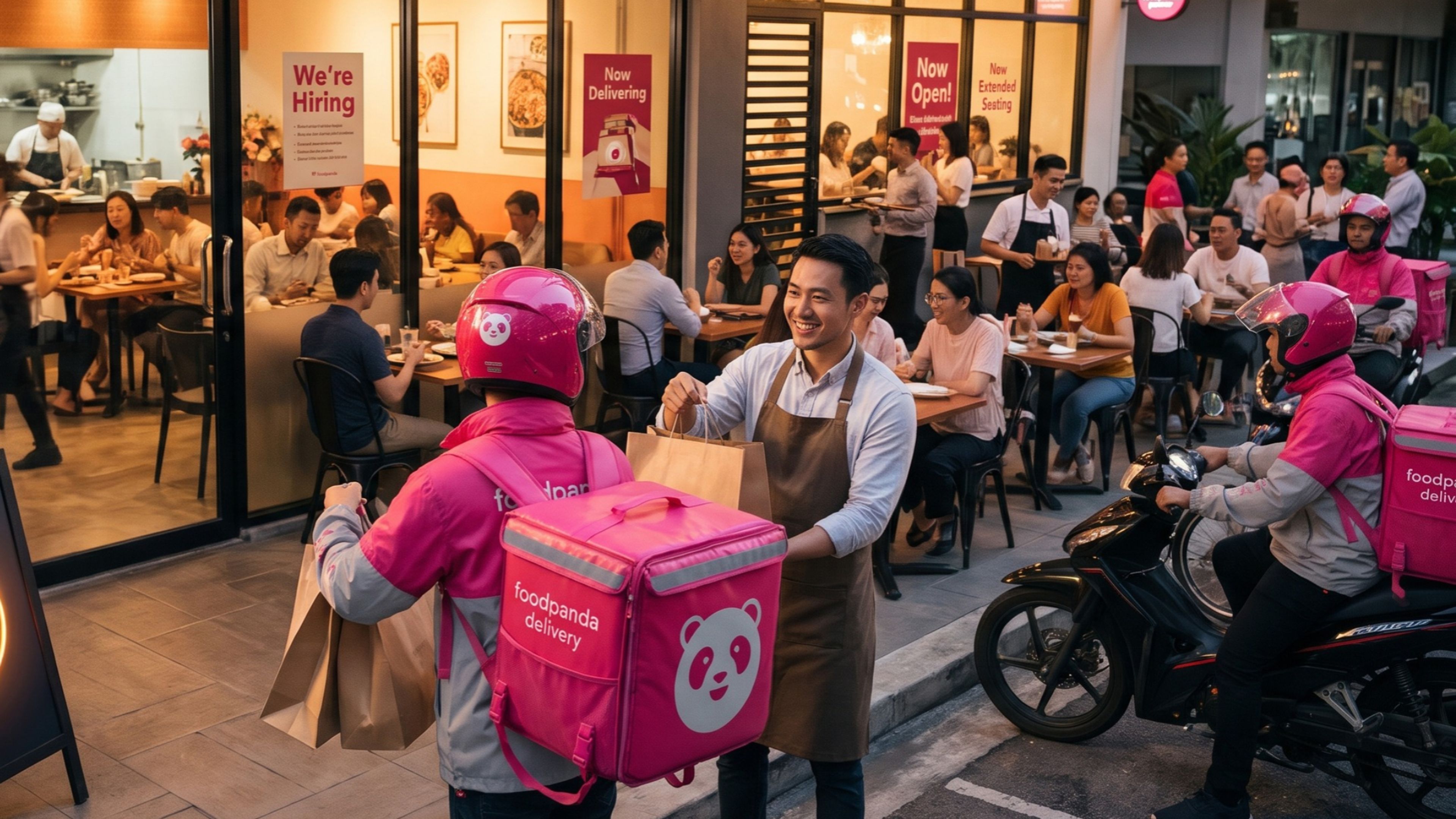
During the lunch rush, your kitchen might be working at full capacity, yet dinner service could see half your tables empty. Delivery orders often provide decent revenue, but the pressure of commission fees might make you hesitant to invest in marketing. You may want to build a social media presence but struggle to find the time, or perhaps you need to raise prices but worry about losing loyal regulars. If this sounds familiar, you are certainly not alone. This is a common symptom across the hospitality industry as it enters a "dual-track" consumption era.
Rather than passively plugging holes in the business, it can be highly effective to treat your restaurant as a complete "ecosystem." This means using engaging content and loyalty programmes to capture attention online, whilst relying on exceptional in-store experiences and upselling to protect your profit margins offline.
Through our lens as a food delivery platform, we have gathered several observations and suggestions that might help you relieve pressure during peak hours, attract new customers during quieter seasons, and standardise your signature dishes into a steady stream of cash flow.
Below, we have broken these concepts down into actionable suggestions for your consideration.
1. Acknowledge the Shift in Consumer Behaviour
The way customers interact with restaurants has fundamentally changed. Acknowledging this can help you adapt your strategy seamlessly:
- The co-existence of at-home and in-store dining: Customers frequently use delivery apps to compare prices and read reviews from the comfort of their homes. However, when they visit in person, they are looking for an experience worth sharing or "checking in" for. A balanced approach ensures you cater to both needs effectively.
- Short-form video as a new entry point: While you do not need to host live streams every day, creating a space and process that is "shareable" can work wonders. Consider maintaining consistent visual branding, simple storytelling, and clear calls to action (CTAs) that encourage customers to film and share their experiences.
- Cloud delivery as a supplement, not the entirety: "Cloud kitchens" or virtual brands without an offline presence can sometimes struggle with customer retention. A more robust approach often involves using online delivery to accelerate brand awareness, whilst using your physical venue to deliver premium experiences and higher average order values.
2. Six Profit Models: Attracting Attention and Revenue
Consider how you might draw more attention and orders to your business using these six models:
Model 1: Capturing Differentiated Orders
- Action: Try mapping out the menus, reviews, prices, and delivery times of 10 competitors within a 2-mile radius. Identify three specific areas where you can instantly stand out (e.g., faster lunch service, family bundles for dinner, or special late-night pricing).
- Tools: Utilise delivery platform search functions, Google Maps, and your own POS data to identify peak times and popular items.
Model 2: Redefining the Competition
- Concept: Your true competitor isn't necessarily the restaurant next door, but the customer's next alternative option.
- Strategy: Compete based on "scenarios" (e.g., quick office lunches, weekend family gatherings, or match-day takeaways). For each scenario, try to offer one flagship item paired with one high-margin side dish.
Model 3: OMO (Online-Merge-Offline) Awareness
- Online: Share short videos (30–45 seconds), social media updates about menu changes or kitchen stories, and targeted messages to your loyalty members.
- Offline: Repurpose your online content for digital signage in-store, use QR code menus, and train staff to use upselling prompts at the till.
- Key Takeaway: Reusing the same content across multiple channels can significantly reduce your marketing production costs.
Model 4: Cloud Sales and Corporate Orders
- Concept: Office parks and business districts are prime targets for lunchtime deliveries.
- Strategy: Consider offering standardised catering bundles for 10, 20, or 50 people. Setting a minimum order value and a next-day delivery requirement (T+1 SLA) can help streamline your kitchen prep.
Model 5: The Second Curve (Diversification)
- Retail Products: Explore standardising your signature broths, sauces, or drinks for retail. The fridge in your restaurant can become a reliable source of additional cash flow.
- Internal Influencers: Encourage your manager or head chef to become the friendly face of the brand, perhaps through a weekly short video sharing a recipe tip or unboxing a new ingredient.
Model 6: Partnerships and Collaborations
- Concept: Partner with non-competing businesses that share a similar demographic (e.g., local cafes, dessert shops, or sports events) to cross-promote via social media and offer joint bundles.
- Evaluation: When assessing a partnership, ask yourself: Will it bring in new customers? Will it improve margins? Is it scalable to other branches?
3. Mindset Shifts for Restaurant Owners
Sometimes, stepping back and reframing your approach can unlock new growth:
- Move from the comfort zone to the growth zone: Rather than celebrating the occasional record-breaking month, consider shifting to a structured quarterly review process to ensure consistent progress.
- Invest in modern skill sets: Roles such as social media managers, data analysts, or content planners are increasingly becoming essential investments rather than luxuries.
- Learn openly: Networking and exchanging insights with brands of a similar size is often far more beneficial than relying on industry hearsay.
- Lead the learning journey: When exploring new trends or visiting successful concepts, bring your management team along. Experiencing it together makes it much easier to implement new Standard Operating Procedures (SOPs) back at base.
4. Building an Internal Ecosystem: Systematising Your Venue
To ensure your restaurant can thrive even when you are not there, establishing robust internal systems is highly recommended:
- Organisation and Structure: Clearly define roles (Store Manager, Assistant Manager, Supervisors, Full-time staff, and Part-time staff). Implement a two-stage interview process and align pay scales and training with these distinct levels.
- Finance and Compliance: Embracing digital payments often simplifies accounting. Ensure that taxation and operational costs are factored into your menu engineering.
- Brand Standardisation: Maintain consistency in visual identity (VI), uniforms, customer service scripts, product launch rhythms, and digital display templates.
- Franchise Preparation: Even if you aren't franchising yet, creating an operations manual (covering site selection, space utilisation, kitchen flow, equipment lists, and training materials) will make your current operations smoother.
- Supply Chain: If you venture into retail products, consider starting with small-batch OEM (Original Equipment Manufacturer) production to test quality before scaling up.
5. Let the Data Speak: Key Metrics to Monitor
Tracking performance objectively helps take the guesswork out of management. Here are five metrics you might find helpful to monitor using your POS, delivery platform dashboards, and loyalty systems:
| Metric | Suggested Target | Why It Matters |
|---|---|---|
| Order Fulfilment Time (including delivery) | Under 30 minutes (adjust based on cuisine) | Ensures food quality and high customer satisfaction on delivery platforms. |
| Average Order Value (AOV) Structure | Main dish ≤ 70%, Sides & Drinks ≥ 30% | Maximises profitability, as sides and drinks typically carry higher margins. |
| Customer Return Rate (30 Days) | ≥ 25% (combining delivery and dine-in) | Indicates brand loyalty and the effectiveness of your retention strategies. |
| Out-of-Stock Rate during Peak Hours | < 5% | Minimises lost revenue and customer frustration during busy periods. |
| Loyalty Programme Penetration | ≥ 40% of orders linked to a member ID | Provides valuable data for future marketing and personalised promotions. |
6. Venue Design and Footfall Management
A larger venue doesn't automatically guarantee higher profits; intelligent design and flow are far more crucial:
- The Flagship Store (Full kitchen & seating): This is designed to deliver the complete brand experience and encourage a higher average spend per head.
- The Express/Single-Item Outlet (Drinks, desserts, or fried items): Consider opening a smaller, streamlined operation near your main store to capture passing trade, reduce queues, and increase overall table turnover at the main venue.
- Vending Machines or Collection Lockers: These can serve as excellent supplementary channels for off-peak convenience, though they should be viewed as an addition rather than a primary revenue stream.
7. Menu Engineering and Price Adjustments
Adjusting prices can be daunting, but transparent communication and strategic menu design can ease the transition:
- Communicate clearly: Price increases shouldn't be a surprise. Give customers 1–2 weeks' notice via social media and in-store signage. Pairing a price increase with a menu upgrade or an exciting new product often helps soften the impact.
- Optimise bundles: Use high-margin sides and drinks to dilute the rising cost of your main ingredients. This helps you design an "ideal basket size" that works for both you and the customer.
- Remove underperformers: If an item has delivered low margins and takes too long to prep for two consecutive quarters, consider removing it from the menu or altering the recipe.
8. Creating an Annual Promotional Rhythm
Relying solely on dine-in traffic during holidays is a missed opportunity. Consider planning your major campaigns (e.g., Mother's Day, Back-to-School, Christmas) at least eight weeks in advance using this suggested timeline:
| Timeline | Action Required |
|---|---|
| Week -8 | Confirm the campaign theme and bundles. Apply for promotional slots on delivery platforms. |
| Week -6 | Finalise visual assets and schedule social media posts. |
| Week -4 | Conduct internal staff training and secure necessary inventory. |
| Week -2 | Send teaser emails/messages to loyalty members; invite influencers for tasting sessions. |
| Launch Week | Go live across all channels and post daily short-form video updates. |
9. The Golden Cost Ratio: A Guide for Profitability
To build a sustainable business, keeping a close eye on your outgoings is vital. Here is a widely recommended target cost structure for your consideration:
| Expense Category | Suggested Target Ratio | Notes |
|---|---|---|
| Rent | 8–10% (Maximum 12%) | Keep property costs strictly controlled to allow breathing room. |
| Cost of Goods Sold (Ingredients) | 35% | A common pitfall is letting this creep to 50% due to poorly designed bundles. Aim to lower this by reducing main meal dependency to under 70% of the basket. |
| Labour | 20–25% | This includes overtime, national insurance, training, and recruitment costs. |
| Miscellaneous Expenses | 10% | Utilities, packaging, marketing, and general admin. |
| Depreciation & Amortisation | 10% | Accounting for equipment wear and tear and initial fit-out costs. |
Once this structure matures, an operating profit margin of 20% becomes an achievable target. A great first step is to focus on getting your ingredient costs down to 35%.
10. A Suggested 90-Day Roadmap
Ready to implement these changes? Here is a practical, step-by-step guide to help you build momentum over the next three months.
| Phase | Key Objectives |
|---|---|
| Days 0–7: Assessment | Complete your competitor mapping (10 venues within a 2-mile radius). Identify 3 immediate opportunities to outperform the competition. Audit your 5 key metric baselines (fulfilment time, AOV structure, return rate, out-of-stock rate, and loyalty penetration). |
| Days 8–30: Optimisation | Launch a standard template for short videos (aiming for 1 per week) and sync it with your in-store digital displays. Restructure your menu bundles (Main + Side + Drink) and train staff on upselling scripts. Segment your loyalty members (e.g., new, returning, high-spenders) and set up at least two automated marketing messages. |
| Days 31–60: Expansion | Test a streamlined express counter or temporary window for single-item takeaway collections. Execute one cross-promotional campaign with a non-competing local business. Host one scheduled live-stream or behind-the-scenes social media event (e.g., prepping a new dish or introducing the team). |
| Days 61–90: Future-Proofing | Evaluate the potential for retail products: trial a small OEM run of one popular sauce or drink. Review your Golden Cost Ratio, aiming to shave 3–5 percentage points off your ingredient costs. Draft version 1.0 of your "Operations & Expansion Manual" (covering site criteria, efficiency models, and opening checklists). |
The Next Step: Systematising Your Success
The hospitality industry has evolved beyond simply relying on great-tasting food. Consumers have an abundance of choice, platform algorithms frequently update, and overhead costs remain a constant pressure. These are shared realities for restaurant owners everywhere. We believe that by shifting your perspective and treating your restaurant as an adaptable ecosystem, you can secure long-term competitiveness.
Consider keeping these three principles in mind as you move forward:
- Clarity of Strategy: Identify your ideal customer and dining scenarios before finalising your menu and marketing plans.
- Actionable Systems: Utilise SOPs, data tracking, and clear staff structures so that your daily operations can be easily replicated without relying entirely on your personal presence.
- Long-term Rhythm: Look beyond the occasional spike in sales from a one-off promotion. Focus on building a rhythm of quarterly reviews and annual planning.
If you can begin using data as your compass, processes as your foundation, and customer experience as your core focus, your restaurant can build the resilience needed to weather industry changes. The true mark of success isn't just about who cooks the best dish; it's about who can elevate a business into a brand, and systematise that brand into a self-sustaining operation. Reaching the point where your venue thrives even when you take a day off—that is the true beginning of long-term profitability.
Ready to unlock the next growth for your restaurant?
Join thousands of local restaurants and businesses to expand customer reach and drive sustainable delivery revenue.
Sign up your restaurant today